



Molinos de Agua Greenway Nature Trail

Route Description
A route with a British flavour
Since the days of the Tartessos, the province of Huelva has been continuously mined for the wealth hidden in its soil. To transport these minerals, numerous narrow-gauge railway lines were built —most of them now closed— that today provide scenic routes for walking and cycling.
Through the Huelva countryside
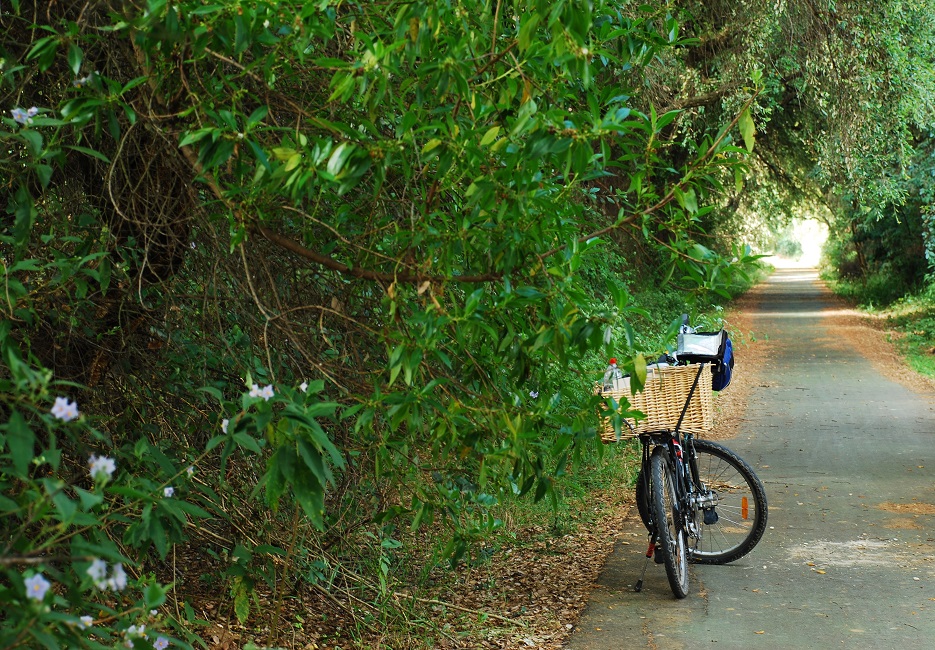 Our journey along this former railway, known as the Buitrón Railway, begins in San Juan del Puerto, a town on the banks of the River Tinto. Here, close to where the ore loading dock for the barges once stood, a beautiful railway station built in Neo-Mudéjar style still survives. From here, we make our way through the town towards the nearby A-49 motorway. The route starts right beside the underpass beneath the motorway, at the northern end of the River Tinto flood channel. We are about to set off on a well-signposted route with a firm, even surface and rest areas along the way: a real privilege when exploring these Huelva landscapes.
As soon as we cross under the motorway, the way ahead is clear: we continue along the clearly marked greenway which, running parallel to the N-435 road, heads arrow-straight northwards, crossing the cereal-growing countryside at an unhurried pace on its way to the town of Trigueros, 7 km away. The growth of the town has “swallowed up” the railway line, and the station now lies buried beneath housing, but a street makes it possible to follow the course of the old trackbed. This is a good place for a technical stop and a chance to cool down after this first stretch, for which sun protection such as a hat or cap is recommended, as the only shade along the way comes from a solitary overbridge.
The Water Mills
Beyond Trigueros, the railway draws the traveller into a leafier setting. A warm dehesa landscape of cork oaks is crossed on a gentle 6 km descent to the site of the old Beas station, at km 12.5, an enclave lying 3 km from the village itself. After passing the site of Beas station, of which no trace remains, we cross the Renegoso stream over a railway bridge. The waters of this stream once provided the power that drove the turbines of a succession of mills. In their day, these mills ground the local harvests; today they stand as a carefully restored reminder of those old arts and crafts. This ensemble can be reached via the Nicoba track, which starts near Beas station. These mills have given their name to the entire route.
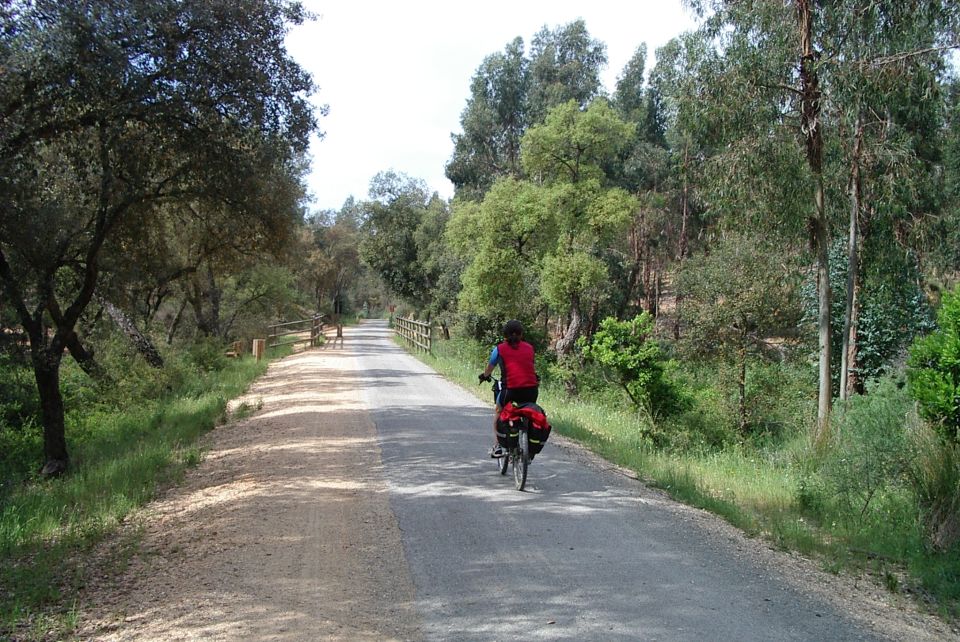
Once past Beas, the landscape becomes slightly more rugged, coinciding with the crossing of a vast area replanted with eucalyptus, interspersed with pines and the occasional patch of cork oak. The path continues through this area in almost complete solitude, only slightly interrupted by the occasional residential colony. Pallares halt, at km 19.9, is the first railway building that travellers will come across. Some signs with a venerable railway ring to them can still be seen on its façade. From here, the cork oaks begin to gain ground over the eucalyptus. The landscape takes on beauty and colour. The geology also changes, revealing, in the railway cuttings, soils of an intense and striking red. From this point on, the trackbed becomes coated in a greenish-toned asphalt, accompanying the traveller all the way to the end of the route. Venta Eligio, at km 25.3, was the next station on this railway line, and still preserves its sober building, standing alone among pines and eucalyptus.
Los Pinos de Valverde
 This was the site of El Cuervo station. From here, two branch lines once ran towards the Sotiel-Coronada mines; today their trackbeds have been repurposed as roads. The station, which took its name from a nearby mine, was renamed in its final years of operation at the request of Valverde del Camino Town Council. It thus took on the more evocative name of Los Pinos de Valverde, exchanging its reference to wildlife for a more fitting botanical one.
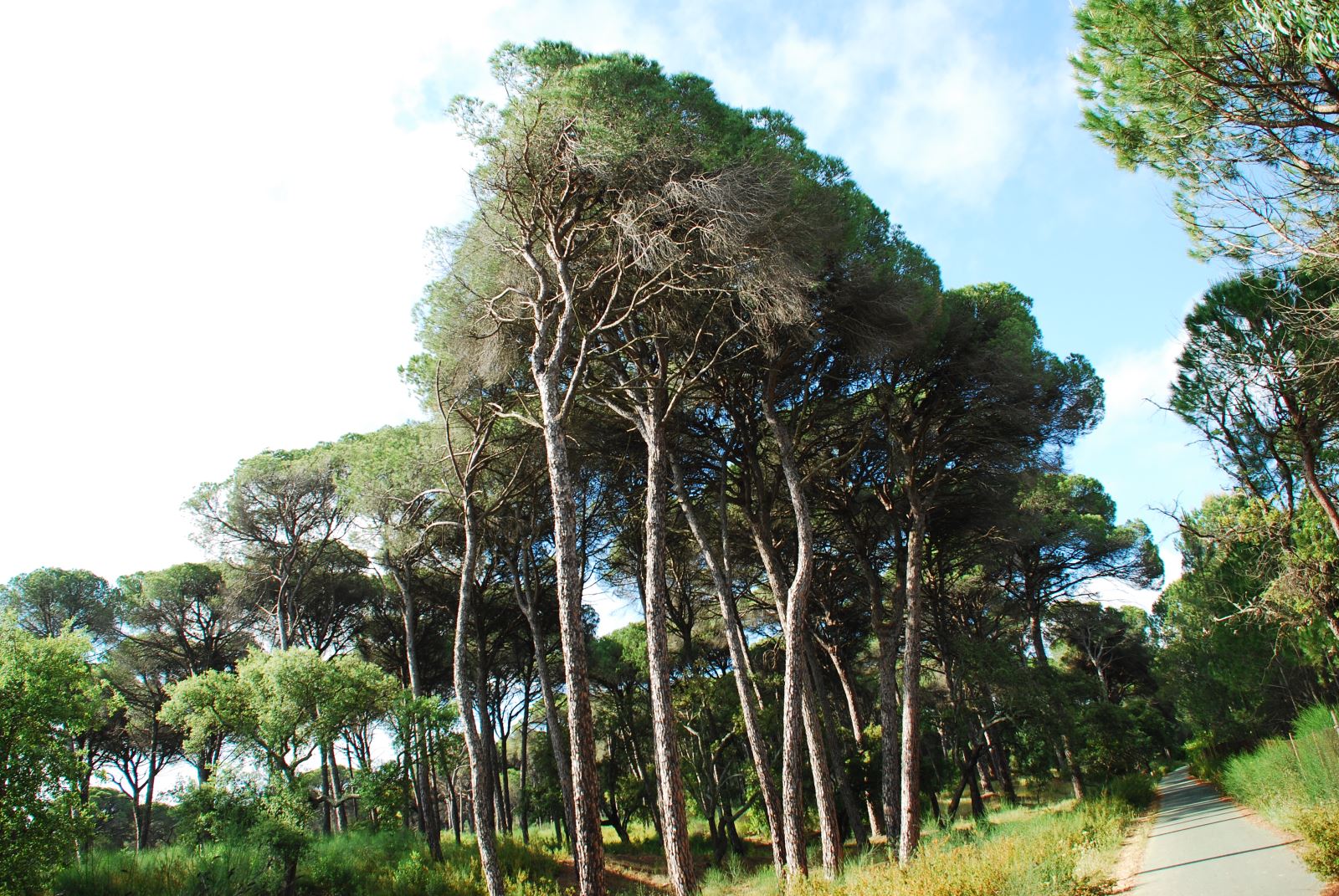
At this same spot, the greenway meets the busy N-435 road. Nothing remains of the old level crossing at this intersection, but travellers can cross it safely and comfortably via an elegant raised footbridge. As its name suggests, this area is known as Los Pinos, a name owed to the stone pines that grow so densely across these lands. These lovely surroundings are also occasionally invaded by lovers of rustic omelettes flavoured with gurumelos — local mushrooms — with whom we may find ourselves sharing the recreational areas set among the centuries-old pines. From here, the route runs bordering detached houses and sheltered from the generous Andalusian sun by a dense canopy of trees.
Arrival in Valverde
 Gradually, at km 33, we reach Valverde del Camino station. This town, renowned for its country boots, was once an important railway logistics centre. Still standing are the company’s office building, the passenger building, the rolling-stock depots and a majestic raised water tank, which supplied the steam engines and still withstands the passage of time. The first two have been lovingly restored and now house the local music conservatoire. The railway workshops have also been carefully restored to house the impressive building now used as the Trade Fair Centre. The Molinos del Agua Greenway Nature Trail ends in Valverde, but the trackbed of this narrow-gauge railway offers other interesting possibilities for continuing northwards.
Of course, anyone deciding to continue will need a greater spirit of adventure, as the route follows a disused and unconditioned railway line. There are 33 extra kilometres of gentle terrain and beautiful landscapes as far as Minas de Riotinto. Other routes, more suited to hiking and classified as short-distance trails, make use of the old railway lines throughout this area and lead to the landscapes around the Concepción, Buitrón and Sotiel-Coronada mines. In Riotinto, visitors can enjoy a mining railway restored as a tourist train, which every weekend and on public holidays follows a stretch of track along the banks of the magical and strange River Tinto. But that is another adventure altogether.
Sponsored by:
